
Partial dentures
A fully milled intermediate solution between a plastic plate and a metal frame
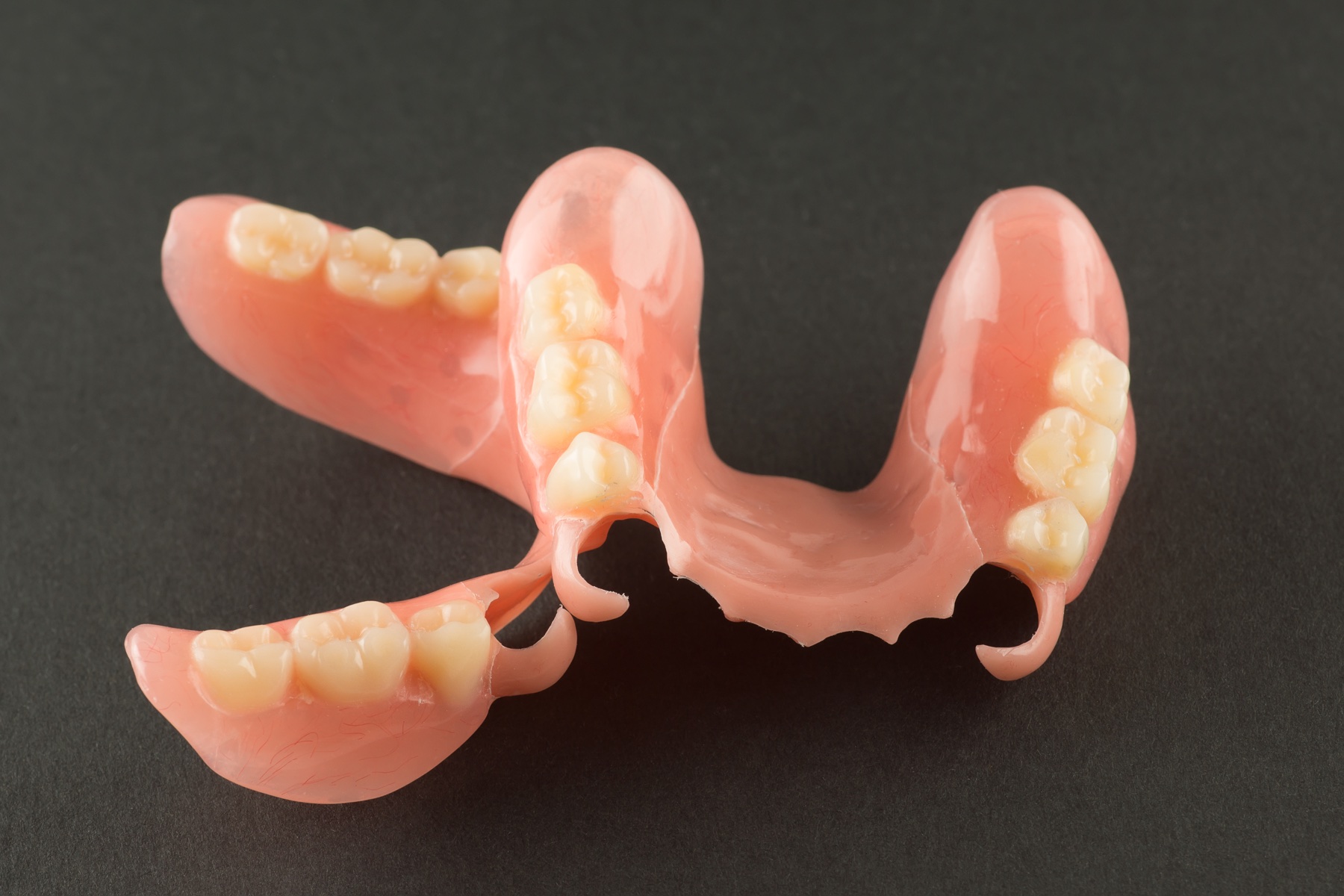
At Van Hoften Tandprothetiek we digitally design the entire basic construction and mill it from one piece of acetal, also called polyoxymethylene or POM. So we do not make loose clasps or small parts from acetal. In our practice, this provision is a clear intermediate solution between a plastic plate prosthesis and a metal frame prosthesis.
No loose acetal parts
Between plate prosthesis and metal frame
What is an acetal prosthesis?
Acetal is a strong thermoplastic. We design the partial denture digitally and mill the entire acetal base, including the retentive parts that provide support, as one coherent construction. The artificial teeth are then incorporated into the milled base.
It is therefore not an ordinary plate prosthesis to which a few acetal clasps are added, nor is it a metal frame with loose plastic parts. Because acetal is less stiff than cobalt-chrome, this fully milled construction requires its own design, sufficient material space and suitable pillar teeth.
Potential Benefits and Major Limitations
Possible benefits
- The entire basic structure is digitally designed and milled in one piece.
- No metal frame is required and no loose acetal clasps are added.
- The tooth or gum colored construction may be less noticeable than metal clips.
- The material is light, smooth and somewhat resilient.
- It is a practical interim solution when a plastic plate is too simple and a metal frame is not desired.
Points of attention
- Acetal is less stiff than a cobalt-chrome frame.
- The fully milled structure often must be designed thicker than a metal frame.
- The hold may be less strong than with metal clasps.
- Wear and tear can eventually affect fit and retention.
- Repairing, relining or adding a tooth later can be more difficult.
- The material is quite opaque and therefore not always completely invisible.
When can acetal be considered?
It may be interesting when
- you want a completely milled solution without a metal frame;
- there are healthy and suitable teeth for support and hold;
- there is sufficient space for a properly designed structure;
- you are looking for an intermediate solution between a plastic plate prosthesis and a metal frame;
- after examination, a practitioner expects that the material can function responsibly.
Extra caution is necessary when
- very strong support or a particularly rigid structure is required;
- the remaining teeth, gums or oral hygiene are insufficiently stable;
- there is little space or insufficient suitable undercuts;
- strong chewing forces, clenching or grinding of the teeth play a role;
- teeth will probably have to be added later or many repairs can be expected.
Acetal compared to other partial dentures
| Solution | Appearance | Support and stiffness | Adjust or repair | Especially suitable for |
|---|---|---|---|---|
| Completely milled acetal prosthesis | The tooth or gum colored base is milled as one piece and does not contain a metal frame. | An intermediate solution between plate and frame; less stiff than cobalt chrome and therefore designed differently. | Often more difficult due to limited adhesion to other plastics. | When a completely milled, metal-free base is desired and the oral situation allows sufficient support and hold. |
| Cobalt-chrome frame prosthesis | Metal clips may be visible. | Very stiff and usually provides reliable support. | Adjustments are possible, but depend on design and damage. | A sustainable partial provision where good support is important. |
| Plastic plate prosthesis | Pink acrylic; wire clasps may be visible. | Rests more on the mucous membrane and is generally less stable than a frame. | Often relatively easy to adapt or expand. | A temporary solution or replacement of a limited number of teeth. |
| Flexible nylon prosthesis | Often gum-colored and without visible metal clips. | Very flexible; limited stiffness and support. | Repair and expansion can be difficult. | Specific indications; not automatically suitable as a definitive solution. |
This overview is general. The quality of the remaining teeth, the bite, the mucous membrane, the available space and your wishes determine which solution is responsible.
This is how we determine what suits you
We don't just compare materials. We mainly look at the support, hold, your remaining teeth and what you consider important. This is how the choice is made step by step.
Free intake and listening to your wishes
We discuss what you are missing, what you find important in terms of appearance, comfort and support and what experiences you already have.
Examination of mouth, teeth and bite
We assess the supporting teeth, gums, oral tissues, available space and the way your teeth come together.
The three solutions side by side
You will receive a clear explanation about a plastic plate denture, our fully milled acetal denture and a traditional metal frame, including the advantages and limitations.
Impression or digital scan and individual design
After your choice, we will record the oral situation. The design is tailored to support, stability, hold, appearance and cleanability.
Placement, adjustment and aftercare
We check fit and bite, provide maintenance instructions, and schedule additional checking or adjustment as necessary.
Clean and check
Daily maintenance
- Remove the prosthesis and clean all surfaces carefully.
- Use a separate denture brush and follow the advice for the material used.
- Clean your own teeth, molars and gums extra well around the clasps.
- Do not use hot water or aggressive or abrasive cleaning agents.
- Store the prosthesis as personally agreed with you.
Have it checked earlier at
- loosening, tilting, or loss of hold;
- pain, pressure sores or damaged gums;
- a crack, deformation or damaged clasp;
- food that keeps getting stuck under the denture;
- tenderness or a change in a supporting tooth.
Frequently Asked Questions
What is milled entirely from acetal at Van Hoften Tandprothetiek?
We mill the entire basic construction of the partial denture as one piece from acetal, including the parts that provide support. So we do not make separate acetal clasps that are added to a plastic plate or metal frame. The artificial teeth are then incorporated into the milled base.
Is this acetal prosthesis metal-free?
The fully milled acetal base contains no metal frame. During the personal design, we always discuss exactly which parts and materials the final facility consists of.
Is acetal better than a metal frame?
No, not in general. Our fully milled acetal prosthesis is between a plastic plate and a metal frame. It can be aesthetically pleasing and has no metal frame, while cobalt chrome is stiffer and often provides more predictable support and hold. The best choice depends on the oral situation.
Are the clasps completely invisible?
They can be significantly less noticeable by being made in a matching color. However, acetal is opaque and the clasps are often somewhat thicker. We therefore cannot promise complete invisibility.
Can an acetal prosthesis be repaired?
Some repairs are possible, but acetal has limited adhesion to many common repair plastics. A repair, expansion or relining can therefore be more complicated and sometimes a new construction is more sensible.
Can an extra tooth be added later?
That is not always easy. If it is expected that teeth or molars may be lost later, we will explicitly take this into account when choosing materials.
Is an acetal prosthesis reimbursed?
This depends on the treatment plan, the type of partial denture, your Dutch insurance or Belgian health insurance and the applicable conditions. You will receive an explanation in advance and, where possible, a written cost estimate. The insurer or health insurance fund determines the personal reimbursement. Also read our explanation costs and reimbursement.
How long does an acetal prosthesis last?
There is no fixed term for this that applies to everyone. Chewing forces, wear and tear, oral hygiene, changes in teeth and jaw and the chosen construction all have an influence. Regular checks therefore remain important.
Personal review
Would you like to know whether acetal is suitable for your oral situation?
During a free intake we listen to your wishes and compare a plastic plate prosthesis, our fully milled acetal prosthesis and a metal frame prosthesis. Only after examination can we honestly indicate which intermediate step or definitive solution suits your oral situation.
Substantiation and due care
- Literature study: polyoxymethylene in removable partial dentures
- Japan Prosthodontic Society: clinical application of non-metal clasp dentures
- Investigation of the physical properties of polyacetal
- Comparative study on retention and deformation of acetal and cobalt-chrome clasps
This page provides general information and does not replace a personal oral examination, treatment plan or decision from a health insurer or health insurance fund.