
An implant treatment is more than placing an artificial root. A good assessment, clear explanation, a calm pace of treatment, a suitable prosthesis and long-term aftercare are all part of the same process. On this page you can read what implantology entails, when implants may help and what you can expect before, during and after treatment.
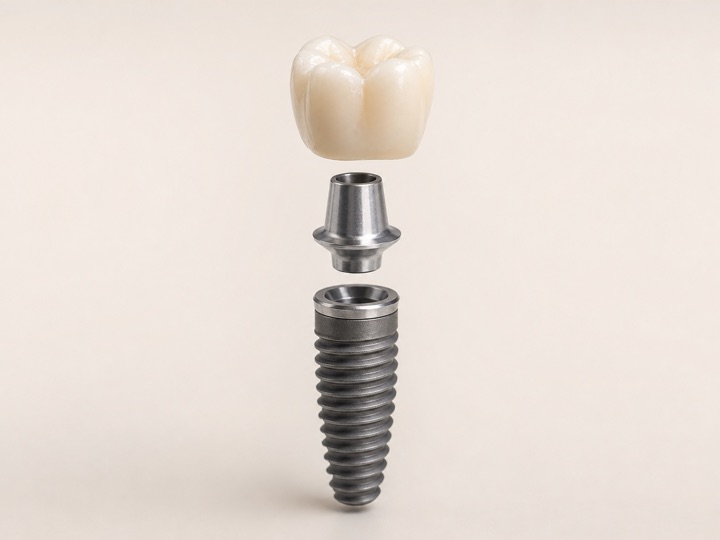
What is a dental implant?
A dental implant is an artificial root that is placed in the jawbone. Most implants are shaped like a small screw and are made of a body-friendly material, usually titanium. After a healing period, an implant can support:
- one crown to replace a missing tooth or molar;
- a fixed bridge when several teeth are missing;
- a partial removable prosthesis;
- a implant-retained removable denture in the upper or lower jaw.
Van Hoften Tandprothetiek focuses mainly on the dental prosthetic part: designing, making, installing and maintaining the prosthesis. The implantological assessment and surgical treatment are carried out by the implantological practitioner.
Implant, stud attachment, bar and implant-retained removable denture: what is the difference?
The implant is in the jawbone. An intermediate part is placed on top of the implant. This can be a separate stud attachment, also called a locator, or a metal rod between several implants, a bar. The implant-retained removable denture contains suitable parts that allow the denture to click into place on the stud attachments or bar.
Implant-retained removable dentures are therefore usually more stable than regular dentures, but remain removable. You remove it from the mouth to thoroughly clean the teeth and implant parts every day. The choice of stud attachments or a bar depends on your oral situation, the available space, the number of implants, cleanability and the treatment plan.
When can implants be considered?
Implants can be an option when one or more teeth are missing, but also when complete dentures have insufficient hold or stability despite adjustments. A loose lower denture in particular can cause a lot of hindrance when eating, talking or laughing. However, implants are not automatically the best or only solution.
During an initial consultation, we discuss your symptoms, wishes and expectations. Sometimes an existing denture can be adjusted, relined or replaced. If implants may offer benefits, a dental implant assessment follows.
Am I suitable for implants?
This can only be assessed after an individual examination. The treating clinician considers factors including:
- the quantity and quality of the jawbone;
- the health of the gums and oral mucosa;
- your oral hygiene and whether daily cleaning is feasible;
- your general health and healing ability;
- smoking or vaping;
- diabetes and other conditions;
- medications, including blood thinners and certain osteoporosis drugs;
- previous radiotherapy to the head and neck;
- the space in the mouth, the bite, and the forces during chewing or grinding.
Age alone does not usually determine whether implants are possible. Health, bone, oral hygiene and the ability to continue to visit check-ups weigh more heavily. Never stop taking prescribed medication yourself. Take a current medication overview with you from your pharmacy and always discuss changes with the practitioner.
This is how the implantological process can proceed
- Acquaintance and listening. We discuss your request for help, experiences, possible fears, health and expectations.
- Examination and diagnosis. The implant dentist examines your mouth and, if needed, takes or assesses X-rays or a 3D scan. The assessment includes bone, nerves, the maxillary sinus and surrounding structures.
- Treatment plan and cost estimate. You will receive an explanation about options, alternatives, risks, division of tasks, costs and possible reimbursement. If permission from an insurer or health insurance fund is required, this must be requested before the treatment.
- Preparation. Inflammation and oral hygiene problems need to be addressed first. Tooth extraction, bone augmentation or other preparatory treatment may sometimes be needed.
- Implant placement. This is usually done under local anesthesia. The practitioner creates space in the jawbone, places the implant and closes the wound area according to the chosen treatment protocol.
- Healing and ingrowth. The bone must adhere to the implant. This period often lasts several months, but varies per jaw, bone quality and treatment. Sometimes a temporary prosthesis can be worn; this is adjusted if necessary to prevent unwanted pressure.
- Uncovering the implant and fitting its attachment. Depending on the technique, the implant is uncovered later and a stud attachment, bar or other attachment is fitted.
- Taking impressions or digital scans. Van Hoften Tandprothetiek accurately records the implant position and oral situation.
- Bite assessment and fitting. If necessary, we record the bite and check shape, tooth position, appearance and function during a fitting appointment.
- Fitting the definitive denture. You will receive an explanation about inserting, removing, cleaning and getting used to.
- Aftercare and periodic check-ups. We check fit, bite, wear, click parts, mucous membrane, implant tissue and your daily cleaning.
Not everyone goes through exactly the same steps. Sometimes additional examinations, check-ups or interim appointments are necessary. We always tell you what the next step is and who you can contact for this.
Does insertion hurt?
The placement is usually done under local anesthesia. You should not feel any sharp pain during the procedure. Afterwards, pain, swelling and bruising may occur. The extent and duration differ per person and per procedure. You will receive personal instructions from the implantologist; those instructions always take precedence over general information on this website.
Recovery after fitting
- Follow the practitioner's wound and medication instructions carefully.
- Do not eat anything hot while the anesthetic is working and be careful not to bite your lip, cheek or tongue.
- Choose soft foods for the first period if chewing is sensitive.
- Do not smoke or vape; this increases the risk of inflammation and can adversely affect healing.
- Call before you make any changes to a temporary prosthesis yourself. Pressure on the surgical area can disrupt healing.
- Come to the agreed wound, implant and prosthesis checks.
When should you contact us immediately?
Contact the practitioner if bleeding does not stop, increasing swelling or pain after the initial recovery period, fever, pus or a bad taste from the wound area, persistent numbness, a loose implant or attachment, or if the prosthesis suddenly no longer clicks into place properly. In case of severe shortness of breath, swallowing problems or other acute medical emergency, call 112.
Daily maintenance of implants and implant-retained removable dentures
An implant cannot be affected by tooth decay, but the gums and jawbone surrounding it can become infected. Plaque around implants can lead to inflamed mucous membranes and eventual loss of bone around the implant. Good daily cleaning and checks therefore remain important for life.
- Remove removable implant-retained removable dentures from the mouth every day.
- Clean the implant-retained removable dentures according to the advice you receive when fitting.
- Brush the stud attachments, bar and gums at least twice a day with the recommended tools.
- Only use interdental brushes, a special implant brush or other aids of the size and technique that has been explained to you.
- Also clean your tongue, palate and toothless gum ridges.
- Only wear the dentures at night if this is expressly advised; usually the mucous membrane and implant environment are given rest without a prosthesis.
- Have worn plastic rings, clips or other click parts replaced in a timely manner.
Read our detailed explanation about cleaning and storage.
How long do implants and implant-retained removable dentures last?
Implants are intended for long-term use, but there is no lifetime guarantee. Dental hygiene, smoking, health, stress, checks and technical wear and tear influence the lifespan. The implant-retained removable dentures and click parts wear out through daily use and sometimes need to be adjusted, filled, repaired or replaced. The implant can therefore still be good while the prosthesis or click system requires maintenance.
Possible risks and complications
Most treatments proceed without major problems, but no operation is without risk. Possible complications include infection, insufficient fusion, loss of an implant, damage or irritation of a nerve, problems near the maxillary sinus, bone loss due to inflammation around an implant and wear or breakage of parts. The implantologist will discuss which risks are relevant in your situation and what alternatives are available.
Implant Company and Van Hoften Tandprothetiek: who does what?
Implant Company is an independent healthcare provider. The company carries out implantological assessments, implant placements, extractions and implant checks at agreed times within our practice. Van Hoften Tandprothetiek facilitates this, so that patients do not have to go to another practice location for this care.
When surgical implantological treatment takes place at our facility, it is done exclusively in Gulpen. We agree per patient which preparatory, prosthetic and aftercare appointments can take place in Gulpen or Maastricht.
Implant Company has its own patient and claims system and can invoice via Infomedics. Van Hoften Tandprothetiek cannot view or change invoices, payments and billing details from Implant Company.
- Read how the collaboration with Implant Company is arranged.
- Do you have a question about an invoice from Implant Company or Infomedics?
Costs and reimbursement
You will receive an explanation and a written cost estimate in advance for the components that are proposed for you. Implant Company and Van Hoften Tandprothetiek can each estimate and bill their own share.
Netherlands
Implants for implant-retained removable dentures can be reimbursed from basic insurance under certain conditions, for example in the case of a seriously shrunken, completely toothless jaw when a normal prosthesis does not function sufficiently. Prior permission is often required. The deductible and a statutory patient contribution for the prosthetic device may apply. Implants for one missing tooth or molar are usually not covered by basic insurance for adults.
Belgium
The Belgian reimbursement rules differ from the Dutch rules and are subject to conditions, age, indication and treatment. Ask your health insurance company for a written decision before starting, especially if the care is provided in the Netherlands.
- Extensive explanation of reimbursement in the Netherlands
- Extensive explanation of reimbursement in Belgium
Frequently Asked Questions
Can I wear my regular dentures while the implants integrate with the bone?
A temporary or existing prosthesis can often be used, but this sometimes needs to be adjusted to avoid pressure on the surgical area. Only wear and adjust the prosthesis as instructed by your practitioner.
Can I pass through an MRI scan or security gate with implants?
Dental implants do not usually interfere with an MRI scan and do not normally cause an alarm at a security gate. Always report implants in advance to the healthcare provider who carries out the scan.
Can smoking cause treatment to fail?
Smoking increases the risk of wound problems, inflammation around implants and loss of bone or implants. Discuss smoking cessation before treatment; your doctor can help with this.
Can I come even if I'm afraid?
Yes. Please indicate this when making the appointment. During the intake we first take time to listen, explain and determine the pace together. Read how we deal with fear and anxiety.
Would you like to know whether implants are suitable for you?
A website cannot replace an individual examination. During an initial consultation, we assess your symptoms, mouth and wishes. We then explain whether adjusting the denture, making new dentures, an implant assessment or another solution may be appropriate.
Make an appointment or request a call back.
Reliable sources of information
- KNMT – explanation about implants
- KNMT – overdentures and implant-retained removable dentures
- Radboudumc – placing implants and aftercare
This general information was checked on August 4, 2026 and does not replace a personal examination, treatment plan or instruction from your practitioner.